Entradas

Mostrando las entradas etiquetadas como PRIMARY

THE SEVEN WISHES (ALBA GUTIÉRREZ)

Imagen
 Image: The Seven Wishes by John Bauer I would use this image in English class with my fifth graders to practice listening and speaking. I think it is an interesting image that would make you reflect and imagine different possibilities. Before telling the story that this image contains, I would ask them what is that fantastic creature that appears in the image and why do they think it is there. I would also ask them what do they think that this child is feeling. If they think he feels astonishment, fear, curiosity, surprise ... This image would help me start a story related to fantastic creatures such as elves, fairies and introduce the children of this course to this vocabulary that I feel is attractive to them and very motivating. After reading the story, we would practice r eading comprehension . I would ask them questions to see if they have understood the content and if they have followed the sequences. I think this activity is suitable for children in higher grades of Prima...

SILLY SYMPHONY (ISABEL ALONSO)

Imagen
  This activity is for the 2nd grade of Primary Education. The objective, belonging to the subject of Natural Science, is to know the different materials and their characteristics. We will use the technique learnt in the course “story seeding”, giving the students the next words: straw, sticks/wood, bricks/concrete. We can show them pictures or the real materials. We will talk about them saying the shape, colour, size,… If possible, we will let the students touch them, and we will introduce new words in order to describe them. The students will try to imagine a story involving these three materials. We will encourage the students to be creative, using the vocabulary learnt. After that, we will show them the video ("Silly Symphony, The three little pigs"). We will do some games with the flashcards of the materials, with word and picture cards, putting the pairs together, using the memory to hide and find them, putting the flashcards in different places of the classroom and mak...

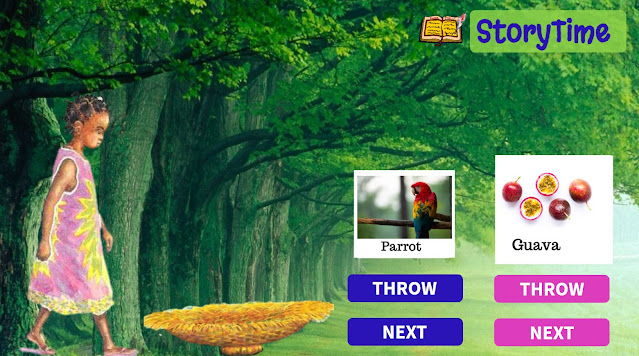
HANDA'S SURPRISE (SILVIA VALENCIAGA)

Imagen
  LEVEL: 1st Primary OBJECTIVE : To create simple stories, adapt stories to different scenarios, use key words from the lesson and compare with the original story. TECHNIQUE : Constructing stories from images. IMAGES : https://view.genial.ly/5fb41da8ac09ff0d9578c5c5/presentation-handas-surprise-creating-a-story ACTIVITY: this is a preactivity before working Handa’s Surprise Book. Students are learning about living things in Natural Science and English. The idea of the activity is to create a story using an animal and a plant that apear at random. There are two images that always appear in the story, Handa and basket. Every day different students create a story and we review words and english structures. Every three days we change the landscape of the story and they could change the story too. Once they have seen all animals and plants and use them through different stories, it is time for listening the original story of Handa. Then, we could compare the original story with th...

PEEKABOO! (BLANCA GONZÁLEZ)

Imagen
  Chameleon hatches from egg. Lesson: Peecaboo!!! Chameleon hatches from egg. LEVEL: This video activity is aimed at sixth-fifth grade Primary Education. This story is based on the technique of “PICTURE-TELLING” (based on Story Seeding technique) and it involves a video which will be revealed at the end of the story-telling session. OBJECTIVES Boost the students creativity and develop their oral and writing skills. Revise Science contents about Animal kingdom (vertebrates & invertebrates, … : reptiles). Develope creative writing skills. ACTIVITIES About the image The image in this activity is a baby chameleon hatched from its egg. First, students cannot see the image. The teacher tells the students about this image on TV and that the subject of this photogragh is a wee, tiny being/creature on somebody’s part of the body. We tell students that before you show them the photograph, you are going to describe it with a text in hand. So we read the text twice slowly and clearly ...

THE LITTLE PRINCE (ALBERTO SANTOS)

Imagen
  THE LITTLE PRINCE “Let me make you a present of a secret: It is only with the heart that one can see rightly; what is essential is invisible to the eye”. LEVEL : A1 (Grade 6) AGE : 10-12 ORGANIZATION : whole class AIMS: 1. To make children aware of the intuitive understanding of the important things in life. 2. To predict what happens in the story. 3. To draw and describe a picture. 5. To describe a character. 4. To write and read a postcard. LANGUAGE FOCUS : present simple, adjectives to describe people and places. MATERIALS : a video of an advert and a piece of paper with a quote from the book “The Little Prince”. PROCEDURE: 1. Show the children the video and ask them what they think is the moral. 2. Give the children a piece of paper with the quote from the book and ask them what they think the phrase “see with the heart” means? Can someone “see” with his or her heart? Why or why not? Do you agree or disagree with this point ...

THE GRINCH (MIRIAM REY)

Imagen
  The technique I am going to use is the picture-telling , and this is the way I would implement it: Grade : 6th Level: Primary education As Christmas is close, I think this photo is very suitable for being used at this time of the year. This activity is going to be developed in the english classroom. Objectives: - To use vocabulary related to physical charactersitics and personality - to use the present continous tense - To make predictions based on a photo - To learn about a famous author and the values that this story transmit. - To learn cultural aspects Lesson planning: 1. I would display the photo on the whiteboard, and I will ask the students to describe just what the see. In this case, the students are supposed to describe the scene and the grinch. For example: I can see a winter landscape. There is a flurry green monster. He is wearing a Santa's jacket. There is a dog sitting next to him, etc. 2. I would ask them now to write short sentences about what they think it is h...

FIGHTING FOR A PLASTIC FREE WORLD IS NOT A CHOICE, BUT A COMMITMENT. A COMMITMENT TO FUTURE GENERATIONS (NOELIA CONDE)

Imagen
LEVEL : INFANTS (5-6 YEARS OLD). OBJECTIVES : • Be conscious plastic is harmful to animals and the environment. • Develop solutions for negative impacts of plastics on the environment. • Think of ways to use less plastic. • Reduce the amount of single-use plastic we use. ACTIVITIES FOR THE EARTH DAY: • WATCH "PLASTIC PLANET" VIDEO-PREDICTION : Firstly, we show them a frame of the video (1’ 15’’) in which they can see the woman in the super shop and when she goes back home. The teacher makes some questions so that students can try to predict what the video is about, questions like: What is this video about? What is the woman doing? How is she taking her shopping home? How many plastic products do we use? Let our students watch the moment in which birds and other sea animals are eating plastic products and the Earth is full of plastic, and I will ask students to explain what has happened and what they think will happen next ( retelling + ...

THE MOST TRULY GENEROUS PEOPLE ARE THOSE WHO GIVE SILENTLY WITHOUT EXPECTING TO BE REWARDED OR PRAISE (BLANCA HOZ)

Imagen
  Tell the story. Grade : 6th grade Aims of the activity : - Use imagination and develop creativity - Develop language, communication and social skills - Develop narrative skills - Expand vocabulary and improve oral expression - Increase interest in children's literature, oral storytelling and narrative creation (reader promotion) - Encourage literacy - Exercise mental flexibility and agility to create new, original and valuable things (encourage innovation) Metodology: Tell the story to your students before showing them the video. You must prepare a narrative text before class. We can tell our story such as : It is an advertisement for the Christmas lottery that was very famous a few years ago.The person who appears looks like a magician and is doing good things wherever he goes. On the screen, we can see fantastic black and white image. After taking some speculations from students, show them the video. Then for homework, ask students to go online and find another blunder video th...

THE EARLY HATCHLING GETS THE WORM (CRISTINA LÓPEZ)

Imagen
  Level : is for the 2nd and 3rd level primary. Subject : English Objectives: To revise vocabulary ( animals, vertebrates or invertebrates, size (big or small). To encourage students oral production. Activities : we may carry on these following main activities Engagement , I will show them only the firts image ( the one in which we can see the title of the story) of the video and ask them what they think is going to happen. We will work the story seed technique. Language production : First, I will ask them the animals they know; what they eat; the kind of animals they are (vertebrate or invertebrate), if they have pets at home. Then, I will show them the picture in which the green bird is trying to eat the worm and I will ask them what could be the end. Finally, after watching the video ask them if they like the end or not and what they think the story is about, eliciting students' answers through questions.

THE LION AND THE MOUSE (Mª ISABEL GONZÁLEZ)

Imagen
  For: 6th grade students Objectives: _ Understand and describe differences between two animals. _ Make predictions about a story. _ Describe emotions. _ Learn about a famous fable, its author and the moral of the story. Lesson Planning: 1. In the first place, I would ask students to describe the two animals in the picture. They can also add more information about those species. _ Lions are big, strong and fierce. They have got sharp teeth and big claws. They live in the savanna and eat meat. _ Mice are small, not very strong and fearful. They have got strong teeth and big ears. They live in the forest or near humans. They eat fruits, seeds and grains 2. In the second place, I would ask them what happened? They would try to guess why the lion got caught in a net. Then, I would ask them these questions: _ What is the mouse thinking? _ Is the mouse scared? Why? _ Is the lion scared? Why? 3. In the third place, I would ask them to use comparatives to...

BORED DUCKS (CLAIRE MACDONALD)

Imagen
  Lesson: Bored ducks! This story is based on the technique of “ PICTURE-TELLING ” and involves an image which will be revealed at the end of the story-telling session. The lesson plan involves reading the story differently three times. It could be used in English class from Primary 1 (6 years old) up to Primary 4 (9 years old) First, the teacher elicits some ideas from the kids as to what the story is about only from the title “The Bored Ducks” by using some “Wh” questions: Why are the ducks bored? Where do the ducks live? What can they do to stop being bored? What do you do when you are bored? When are you bored? First reading The teacher reads the story but doesn´t give the final punchline regarding the final identity of the ducks. With younger age groups this stage could be omitted and proceed directly to the next stage of reading the story . Second Reading This time comprehension is supported by using the vocabulary powerpoint with images. In this stage the final slide...

A NEW TEACHER'S FIRST DAY OF SCHOOL (NURIA MACHO)

Imagen
 Source:  A New Teacher's First Day of School - Kleenex® Brand The first day of school is always very special. This is a story about a new teacher that starts her first day of work at a new school. Who will encourage whom? Level: 6th level of Primary. Objective : A general objective is to give a warm welcome to our students., but students will also: - Promote students' oral skills (by engaging students in predicting what the story is going to be about and by listening to the advert and inferring information) - Talk about emotions, especially related to the first day of school - As secondary linguistic objectives, students will also: • Revise the future tense • Use imperatives (“Remember…” and “Enjoy it!”) Activities : 1) First, I will show the first image of the video and ask them to describe what they see 2) Secondly, I will explain that they are going to watch a video, but first they have to try to make guesses about what this advert, by using the structure "I...

WITTY LITTLE FROG BRAVELY FACES THE RAIN (REBECA TARILONTE)

Imagen
  Source: http://carnivorouswildanimalbestblog.blogspot.com/2016/05/interesting-pictures-of-animals.html I would use the picture-telling technique in the following way: I will use a picture of a frog with a leaf umbrella and I will use it with sixth grade students to improve their oral linguistic competence. It would be a CLIL activity to practice with animal characteristics and groups. First, I would review the key vocabulary students might not know ... After that, I would review questions about animal characteristics , such as Has it got wings? Is it a mammal? Then, I would tell the story and students have to try and guess what animal it is: Once upon a time, there was a very small animal that looked very big. It was sitting on a green leaf as a prince sits on his throne. It was raining a lot. There were big drops of water about to fall down from the leaf. It had been raining for a long time because everything showed different shades of green. It was raining so much that this...

GETTING ON SWIMMINGLY WITH MY NEW FRIEND (MARTA DE ARRIBA)

Imagen
  - Level : 5th grade of Primary. - Subject : Natural Science. - Objectives : To improve oral expression, To create expectation and To encourage pupils to make predictions - Activities: The task is supposed to be accomplished in three main activities : 1) We first show the students a screenshot from the short film and we start a conversation about the setting of the video just to engage the pupils into a conversation (we can ask them some questions so that students can try to predict what the video is about) The pupils watch the moment in which the seal is coming near to diver. 2) Then, the teacher will ask the pupils to explain what has happened and what they think will happen next. 3) Finally we will watch the whole video and the teacher will ask the pupils what the story is about

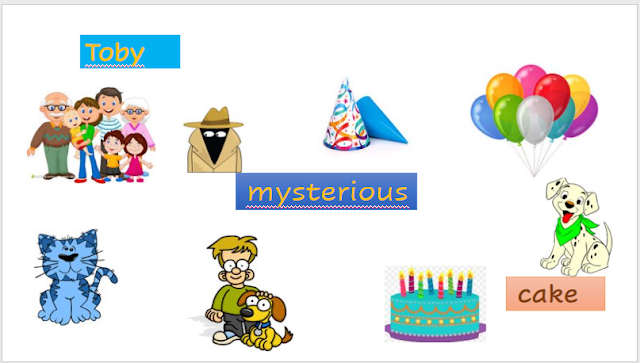
TOBY AND THE MYSTERIOUS CAKE (ANA ESCRIBANO)

Imagen
LEVEL: 2nd or 3rd grade of Primary School OBJECTIVES: *To encourage pupils to create a story with familiar words. * To review the vocabulary and structures worked on. ( Family, birthday...) * To follow a narrative sequence: beginning, middle, end. * To work on oral skills. TECHNIQUE: "Story-seeding" ACTIVITIES: Analyze the image: the pictures and the words. Ask different questions about it: what can they see in the picture? What type of pictures can they see? Who are they? Talk about the birthday images....Read the words ... - Talk about people and pets in "our" story. Who is Toby? Whose birthday is it? How are they going to celebrate? How old is ...? When is "his" birthday? What about the candles on the cake? - What about the mysterious cake......?? Who cooked the cake? Ask questions in order to get information to create the story. What can be the title for the story? Once you consider that you have enough inf...

THE STOLEN SMELL (GUADALUPE GONZÁLEZ)

Imagen
  Level: 6th grade. Objectives: To create expectation and to encourage students to make predictions Activities : This exercise will be carried out through the use of story: The stolen smell First of all, I will show my students the story title, they will have to predict what is the story about.THE STOLEN SMELL Then I will show them some sentences to create expectations about the story: The smell from my baked goods makes his bread taste delicious. He should have to pay for such pleasure. I don’t have enough money to buy anything in your store. You mean you want me to pay ten coins as a smelling fee? The judge said “ It’s my duty to listen to what the baker has to say” he judge sent word to the neighbour that he should bring 5 coins with him. After discussing their expectations I will read a significant sentence from the text: The judge thougth for a while. Finally he declared: “A smell has been stolen. Since stealing is a crime, the neighbour must be punished. Then I will a...

THE DEEP BLUE SEA (MARÍA BARAHONA)

Imagen
  Photo: @Maria17712202 on Twitter Level: 6th grade Primary School Objectives : To encourage students to be creative and use their imagination to tell a story. To improve oral expression . Activities: The task is supposed to be accomplished in three main activities. Activity 1. The teacher shows the picture to the students and encourage them to make questions using "I wonder..." "I wonder who is the girl". "I wonder what is she doing". "I wonder why is she like that". Activity 2 . Once their curiosity has come out, the teacher will give them four key words or expressions: d eep sea - dangerous fish - holiday - no air in the oxygen bottle. The students will have to explain if they consider these expressions are appropriate for the picture or, on the contrary, they don't fit in with the picture. Activity 3: Once they have decided which elements are relevant for the story, all the students will have to create a story based on the pictu...

A NARROW ESCAPE (MANUEL FERNÁNDEZ)

Imagen
  This video can be suitable for the 5th grade of Primary . Subject: Natural Science . First, we tell our students that we have found an amazing video that we have never seen before (If we show excitement they will be more easily engaged with the activity). Then, we show them just a frame of the video in which they can see the sea/lake, the kayak and a flock of birds. The teacher can ask them some questions so that students can try to predict what the video is about, questions like: What kind of place can you see? Does it belong to your city? Why? Why not? What elements can you see? The most likely answers will be: It is the sea, I can see birds, it is not Burgos as I can see the sea and there´s no sea in Burgos, In the middle I see someone using a kayak… Just immediately, we will resume the video and let our students watch the moment in which the whale jumps out of the water and the teacher will ask students to explain what has happened and what they think will happen next (re...

THE MYSTERY BOX (TANIA ROBLES)

Imagen
 Photo source: @kelli_mcclintock on www.unsplash.com LEVE: 8/9 YEARS OBJECTIVES: - To learn and practice how to do questions - To improve pronunciation - To foster imagination - To share their feelings and emotions ACTIVITIES: 1. The students will ask different questions in order to guess what is inside. But the answer can be only YES/NO . For example: is it big? Can you eat it? Is it a toy?... 2. If they cannot guess what is inside, they will close their eyes and one by one can touch the object inside. They have to share with their partners their feelings and emotions. After than they can give their ideas. In my case, inside the box there is an elf puppet but, can be anything, or several things 3. Now they will create their own mystery box. We can divide the class into different groups so the activity will be shorter than allowing every student to do it in front of the class.

LIFE IS WHAT HAPPENS WHEN YOUR CELL PHONE IS CHARGING (YOLANDA MARTÍNEZ)

Imagen
  SOURCE:  viral-black-mass-photo- betty-sushman-living-in-the-moment- boston.com/news/obituaries/2018/05/31/ Topic : ICT use in our society. Objectives : Through this lesson plan students will think about how important is the Information and Communication Technology, becoming aware of the positive and negative impacts in our daily lives. To start, I will read to them this text: Last friday I was waiting for my favourite actor at the premiere of his new film. While I was looking around and a lot of people were absorbed with their electronic devices. I saw an eldery woman just allowing herself to enjoy the moment through her own senses, not through the lens of an smart phone. She was living completely in the moment, looking with her eyes, not through a screen. I thought she was ignored but she looked so happy... That made me forgot to look at my mobile and enjoy the moment. Then, I’ll show my students the picture and the activities could be the following: First of all, I would ...